
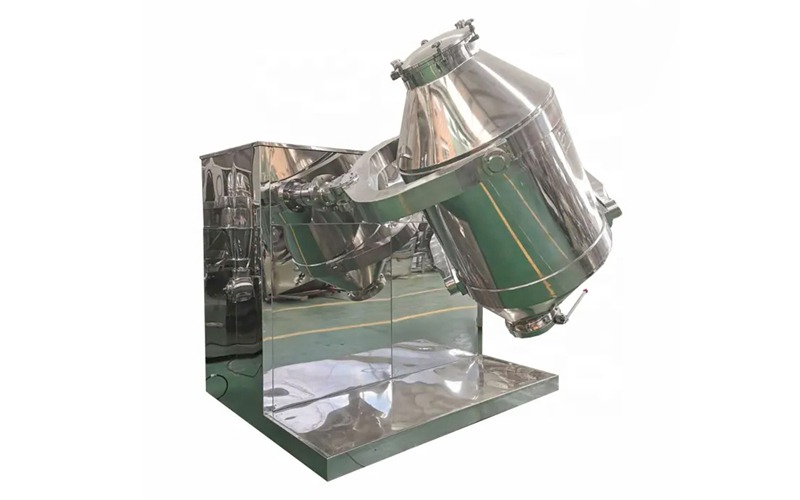
Buying a three-dimensional mixer is more than choosing a size. Specifications, materials, and supplier support determine how quickly the equipment pays back. Use this checklist when you evaluate vendors and quotes.
Quick checklist (must-have questions)
Capacity & fill ratio: What is rated batch volume and recommended fill range? Ask for expected batch mass based on your product bulk density.
Material of construction: Is it 304 or 316 stainless steel? For corrosive or pharmaceutical use, 316L is preferred.
Surface finish: Ra value inside the mixing chamber — smoother finishes reduce residue and help cleaning.
Seals and bearings: What seal type and how often will they need replacement? Request spare part list.
Drive & controls: Is there a PLC/MPU with recipe memory, and are cycle parameters logged? Remote diagnostics are a plus.
Cleaning & access: Are there large access doors, hinged covers, or CIP ports? Can it be fully drained?
Explosion classification / ATEX: Required if you mix combustible dusts. Confirm the vendor can deliver ATEX-certified units.
Heating/cooling options: Jacketed shells or internal coils available? Required for hygroscopic or heat-sensitive products.
Discharge type: Butterfly valve, slide gate, or pneumatic discharge — choose based on cake/flow characteristics.
Validation & documentation: Ask for IQ/OQ/PQ templates, welding records, material certificates, and FAT procedures.
After-sales & training: On-site commissioning, operator training, spare parts lead times, and service contracts.
How to evaluate suppliers
Request references with similar product recipes and throughput.
Insist on a factory acceptance test (FAT) or demonstration with the same motion profile you will use.
Check warranty terms and what constitutes wear vs. manufacturing defect.
Budgeting & total cost of ownership
Initial capex is only part of the story. Consider:
Energy consumption of multi-axis drives vs. other mixers.
Maintenance intervals for bearings/seals.
Downtime for cleaning and changeovers (easier to quantify after a trial).
Factor these into a 3- to 5-year TCO estimate rather than only upfront cost.
