
In industries dealing with active pharmaceutical ingredients (APIs), allergens, or colored pigments, cross-contamination is the nightmare scenario. A trace amount of Product A ending up in Product B can lead to massive recalls, regulatory fines, and reputational damage.
Traditional mixing methods often involve open transfers—pouring powder from drums into a mixer. Every time the product is exposed to air, the risk increases.
The “Closed System” Advantage
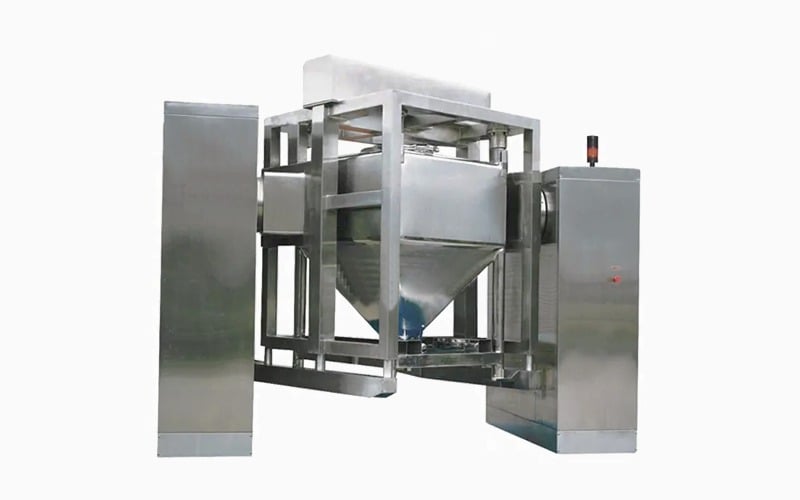
The IBC Bin Mixer is fundamentally designed to solve this problem. It operates as a closed system.
- Loading: Material is loaded into the IBC bin in a separate weighing room.
- Mixing: The closed bin is moved to the mixer. The bin is the mixing chamber. The product never leaves the container during the process.
- Discharge: The bin is moved to the packing or tableting station and discharged directly.
Because the blender itself has no contact parts with the product (only the bin does), there is zero risk of the machine contaminating the next batch.
Protecting Your Workforce
It’s not just about the product; it’s about your people. If you are mixing potent compounds or dusty chemicals, open transfer poses a health risk to operators.
Using an IBC mixer minimizes dust generation. Since the mixing happens inside a sealed vessel, the air in your facility remains clean, reducing the load on your HVAC/filtration systems and PPE requirements.
Simplified Cleaning Validation
Cleaning a fixed 2000L tank is labor-intensive and difficult to validate. Cleaning a mobile IBC bin is much easier. Bins can be taken to a dedicated washing station (or an automated bin washer). This ensures that “dirty” activities are physically separated from the “clean” processing area.
Conclusion
If your facility struggles with dust control or strict validation requirements, moving to an IBC mixing technology is the most effective way to ensure product purity and operational safety.
