
Capital expenditure (CapEx) gets the attention during purchasing, but operating expenditure (OpEx)—driven by maintenance downtime, energy consumption, and wear parts—dictates the actual Total Cost of Ownership (TCO) of industrial machinery.
Many plant engineers specify vibrating screens based solely on throughput, ignoring the long-term impact of equipment vibration on the chassis and the factory environment. Machines that operate erratically destroy their own components and create hazardous noise levels for operators.
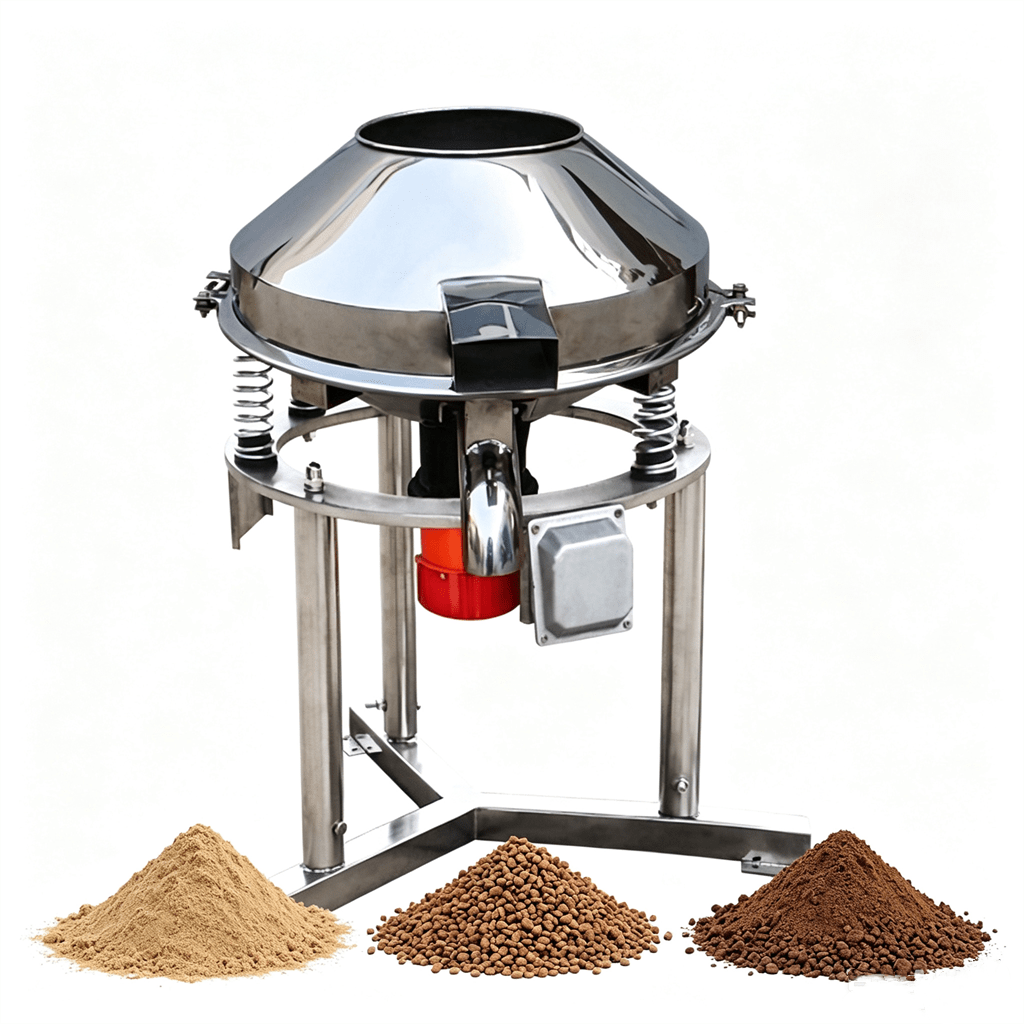
A properly engineered high-frequency vibrating screen addresses these OpEx factors directly. According to the feature breakdown in image_8b8920.jpg, these units are designed specifically to operate stably with low noise, while remaining “simple to operate, easy to maintain, and has low maintenance costs.”
The Economics of Stable Operation
High-frequency screens utilize advanced motor designs and dampening systems (visible in the spring configurations of the CWHF model in image_8b8920.jpg) to isolate the intense vibration to the screen deck itself. This protects the heavy-duty stainless steel base and surrounding plant infrastructure.
Furthermore, the energy efficiency of these units directly impacts your bottom line. Analyzing the technical parameters of the CWHF series reveals an incredibly low power draw relative to the exciting force generated:
Low Energy Footprint: The entry-level CWHF-600 operates on just 0.37kw of power.
High Output Efficiency: Even the largest model, the CWHF-1200, which delivers 1300kn of exciting force across a 1160mm mesh diameter, requires only 1.1kw.
This combination of low power consumption, reduced acoustic footprint, and simplified maintenance routines makes the high-frequency screen a highly pragmatic upgrade for older, inefficient separation lines.
